The Dew Dilemma: How Evening Conditions Could Decide the Indore ODI Before a Ball is Bowled
As the teams finalize their preparations for the series decider in Indore, one factor looms larger than any player's form or tactical plan: the dew. The consensus around the Holkar Stadium is that Sunday's ODI is destined to be a run-fest, but the dramatic shift in evening conditions threatens to turn the contest into a lottery, with the toss potentially holding the key to victory. This climatic wildcard adds a layer of strategic complexity that both India and New Zealand must navigate to make history.
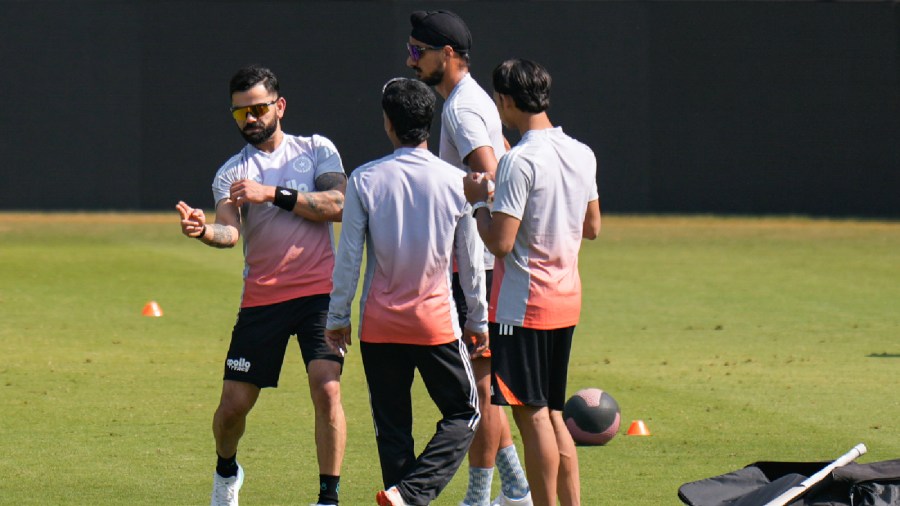
The conditions during the day are tailor-made for batting. The pitch, a black soil belter, promises consistent bounce and minimal wear. Combined with Holkar's famously short square boundaries, as pace spearhead Mohammed Siraj acknowledged, "We are expecting runs." India's star-studded batting order trained with clear intent, with Virat Kohli and Shubman Gill fine-tuning their play against both pace and spin. Rohit Sharma, seeking a substantial score after modest outings, focused intently on the quicks. The stage seems set for the hosts' powerhouse batting to fire.
However, the narrative takes a sharp turn as sunset approaches. Forecasts predict temperatures will halve, plummeting from 27°C in the afternoon to 14°C in the evening. This steep drop, coupled with rising humidity, creates an environment ripe for heavy dew formation. New Zealand all-rounder Glenn Phillips confirmed the threat, noting, "Dew may play a big role especially with the humidity around. With the cooler air in the evening it can get pretty wet." For bowlers, especially spinners, a wet ball is a nightmare. It becomes impossible to grip for turn, difficult to control for line and length, and turns the death overs into a slippery, high-scoring nightmare for the fielding side.
This presents captains with a critical, almost pre-deterministic, decision at the toss. Winning it likely means choosing to chase, banking on the heavy dew to neutralize the opposition's bowling attack in the second innings. It effectively places a premium on winning the coin flip, reducing the 50-over contest into a battle of two starkly different innings: one under a hot sun on a true pitch, the other under lights with a greasy ball. This scenario places immense pressure on the team batting first to post an astronomical total, knowing that even 330 might not be safe.
The conditions also influence team composition and bowling strategies. India's injury-forced balance issues, with Washington Sundar out, are exacerbated. The untested spin of Ayush Badoni becomes a greater risk if dew arrives, making the selection of a sixth bowling option like Nitish Reddy even more precarious. Conversely, it strengthens the case for a bowler like Arshdeep Singh, whose left-arm angle and skill with the new ball could be crucial for taking early wickets before conditions deteriorate. Bowlers will need to master variations—slow bouncers, wide yorkers, and cutters—to have any defensive weapon against the onslaught.
Ultimately, the Indore ODI is poised to be a game of two halves, dictated by the heavens as much as human skill. While a "run-fest" might suit India's batting-heavy lineup on paper, the tyranny of the dew could be the great equalizer for New Zealand. The team that best plans for the dual nature of the day—aggressively capitalizing on the batting paradise upfront, and then resourcefully managing the wet-ball chaos later—will not only win the match but will have mastered one of cricket's most challenging puzzles.
The conditions during the day are tailor-made for batting. The pitch, a black soil belter, promises consistent bounce and minimal wear. Combined with Holkar's famously short square boundaries, as pace spearhead Mohammed Siraj acknowledged, "We are expecting runs." India's star-studded batting order trained with clear intent, with Virat Kohli and Shubman Gill fine-tuning their play against both pace and spin. Rohit Sharma, seeking a substantial score after modest outings, focused intently on the quicks. The stage seems set for the hosts' powerhouse batting to fire.
However, the narrative takes a sharp turn as sunset approaches. Forecasts predict temperatures will halve, plummeting from 27°C in the afternoon to 14°C in the evening. This steep drop, coupled with rising humidity, creates an environment ripe for heavy dew formation. New Zealand all-rounder Glenn Phillips confirmed the threat, noting, "Dew may play a big role especially with the humidity around. With the cooler air in the evening it can get pretty wet." For bowlers, especially spinners, a wet ball is a nightmare. It becomes impossible to grip for turn, difficult to control for line and length, and turns the death overs into a slippery, high-scoring nightmare for the fielding side.
This presents captains with a critical, almost pre-deterministic, decision at the toss. Winning it likely means choosing to chase, banking on the heavy dew to neutralize the opposition's bowling attack in the second innings. It effectively places a premium on winning the coin flip, reducing the 50-over contest into a battle of two starkly different innings: one under a hot sun on a true pitch, the other under lights with a greasy ball. This scenario places immense pressure on the team batting first to post an astronomical total, knowing that even 330 might not be safe.
The conditions also influence team composition and bowling strategies. India's injury-forced balance issues, with Washington Sundar out, are exacerbated. The untested spin of Ayush Badoni becomes a greater risk if dew arrives, making the selection of a sixth bowling option like Nitish Reddy even more precarious. Conversely, it strengthens the case for a bowler like Arshdeep Singh, whose left-arm angle and skill with the new ball could be crucial for taking early wickets before conditions deteriorate. Bowlers will need to master variations—slow bouncers, wide yorkers, and cutters—to have any defensive weapon against the onslaught.
Ultimately, the Indore ODI is poised to be a game of two halves, dictated by the heavens as much as human skill. While a "run-fest" might suit India's batting-heavy lineup on paper, the tyranny of the dew could be the great equalizer for New Zealand. The team that best plans for the dual nature of the day—aggressively capitalizing on the batting paradise upfront, and then resourcefully managing the wet-ball chaos later—will not only win the match but will have mastered one of cricket's most challenging puzzles.
Also Read | How Harbhajan's off-spin made Ricky Ponting feel alone and helpless
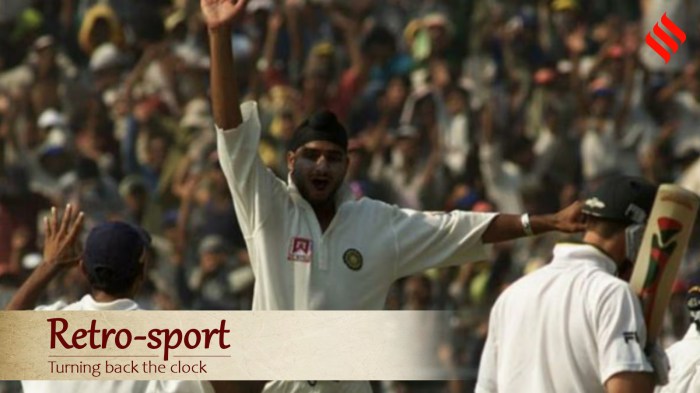
The famous 2001 Test win against Australia was all about the Dravid-Laxman partnership, as well as how Harbhajan Singh's final trap sent the famous Australian line-up on a 16-match losing streak Was. details the mood in the Australian camp and how their batting deteriorated under constant pressure from Harbhajan. The atmosphere was there, but from the moment I stepped into this country for the first time, it became clear to me that Indians respect him. Knew. Didn't worry Ng. Deep deep. It might have changed, but clearly it did not.
Which became the third team to win the Test after four matches. Had batted against.
Don't believe that he had Dravid LBW in the last over before lunch. He was completely terrified at the conclusion of this Test - a quip for which he somehow escaped scrutiny - I don't think he was particularly thinking about it (Ponting bowling), some LBW decisions. It's also the last day about the decision, but they should have included it because it was equally controversial,'' he wrote.
Gave consolation.
"But as soon as Harbhajan started swinging the ball in the Test, I was there immediately," Miley said.
Decided to go down while winging it. For helping me to solve my problems against f spinner. Will take turning wickets to get the score.
I made sure that when I was captain I was always there for the players who were struggling.
Which became the third team to win the Test after four matches. Had batted against.
Don't believe that he had Dravid LBW in the last over before lunch. He was completely terrified at the conclusion of this Test - a quip for which he somehow escaped scrutiny - I don't think he was particularly thinking about it (Ponting bowling), some LBW decisions. It's also the last day about the decision, but they should have included it because it was equally controversial,'' he wrote.
Gave consolation.
"But as soon as Harbhajan started swinging the ball in the Test, I was there immediately," Miley said.
Decided to go down while winging it. For helping me to solve my problems against f spinner. Will take turning wickets to get the score.
I made sure that when I was captain I was always there for the players who were struggling.
Also Read | Why does Anil Kumble think Sanju Samson's signing will contribute to CSK's fan following?
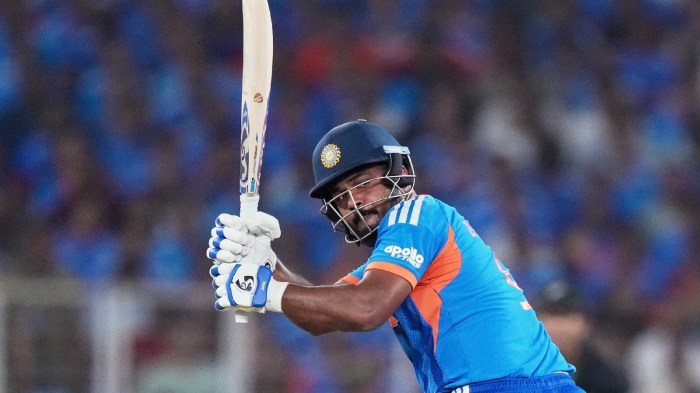
Former India bowler Anil Kumble opened up about Sanju Samson's move from Rajasthan Royals to Chennai Super Kings ahead of the upcoming Indian Premier League season starting on March 28. Champion CSK will take on Sanju's former franchise RR in their opening match on March 30 in Guwahati.
Continue the session. .
Continue the session. .
Also Read | Why can the team's total score be 300 runs in the 2026 IPL?
The descriptions of batsmen who saw their teams slip when the 300-run mark in T20 was within arm's reach are akin to those of mountaineers who were caught back on base within touching distance of E. Had to move away. were looted; Rerana. Can. The hawks are waiting.
Also Read | Kamran Akmal criticized the Pakistan team after the series loss to Bangladesh: 'Do you want to steal the ICC trophy and bring it back?'
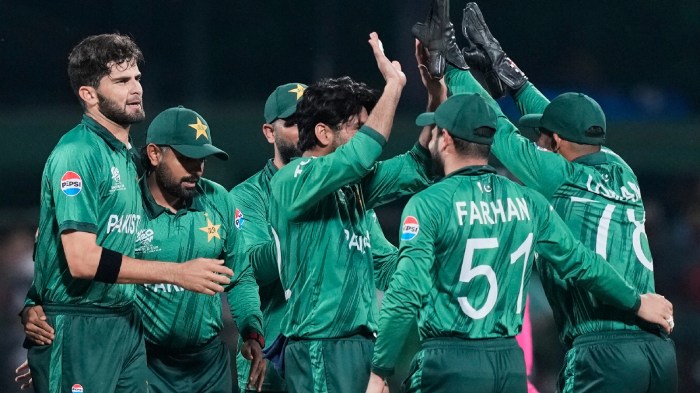
After a disappointing performance in the ICC T20 World Cup, Pakistan suffered an ODI series defeat to Bangladesh. Tore both of them and said that at this pace, how will the party progress?
And you have to remain fit in all three departments.
And you have to remain fit in all three departments.
Also Read | Why can the team's total score be 300 runs in IPL 2026?
The descriptions of batsmen who saw their teams slip when the 300-run mark in T20 was within arm's reach are akin to those of mountaineers who were caught back on base within touching distance of E. Had to move away. were looted; Rerana. Can. The hawks are waiting.