Manjrekar Dismisses ODI Series Loss; Ashwin, Ponting Voice Concerns Over Format's Future
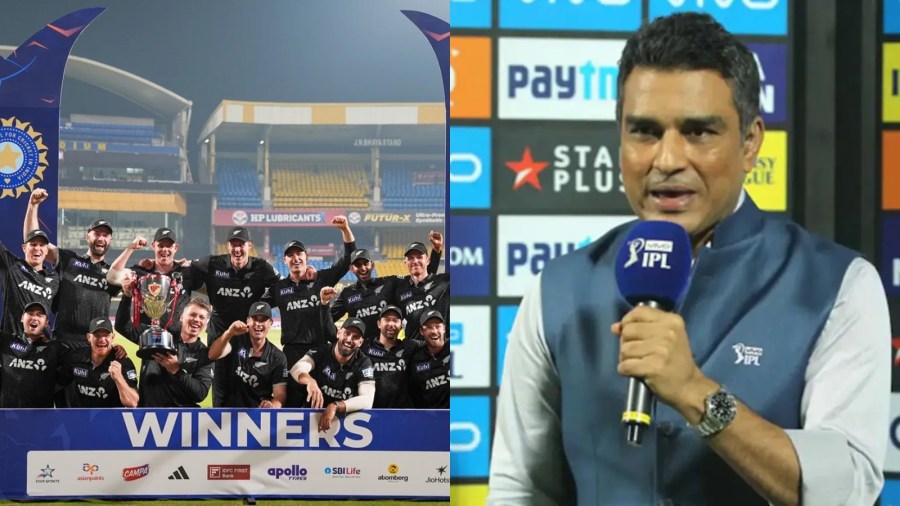
In the wake of India's historic first-ever ODI series defeat to New Zealand on home soil, a significant debate has ignited about the value and future of the 50-over format itself. While the result marked the end of India's seven-year unbeaten run in home bilateral ODI series, former cricketer Sanjay Manjrekar has controversially downplayed its significance, calling it "no big deal." His comments have fueled a larger conversation involving legends like Ravichandran Ashwin and Ricky Ponting, who express deeper concerns about ODI cricket's trajectory in a T20-dominated era.
Speaking on his Instagram handle, Manjrekar framed his assessment around the primacy of the World Cup. "Honestly, in 50-over cricket today, what really matters is the World Cup, not even the Champions Trophy," he stated. He argued that while fans struggle to recall recent Champions Trophy winners, every World Cup champion is etched in memory, thus diminishing the weight of bilateral series. This perspective aligns with his earlier contentious remark where he labeled ODIs as the "easiest format" for a top-order batter, expressing disappointment that Virat Kohli chose to continue in this format after retiring from Tests and T20Is.
In stark contrast, India's spin maestro and cricket thinker Ravichandran Ashwin voiced palpable worry about the format's health. "I am not sure about future of ODI after 2027 World Cup. I am a little worried about it," Ashwin confessed on his YouTube channel 'Ash Ki Baat.' He pointed to a tangible decline in viewer engagement, contrasting the fervent followership of the Syed Mushtaq Ali T20 Trophy (SMAT) with the relatively tepid interest in the domestic 50-over Vijay Hazare Trophy. Ashwin's concern extends beyond just results; it touches on the format's ability to captivate the next generation of fans and players in an increasingly fast-paced sporting landscape.
Echoing these structural concerns, former Australian captain Ricky Ponting provided a technical analysis of how the format's evolution is altering the very fabric of batting. Speaking at an Idea Exchange last year, Ponting observed, "The rhythm and tempo of one-day batting is not like it used to be because of how much T20 cricket is being played." He noted that modern ODI teams often approach the game as "a longer T20," leading to a decline in the nuanced, situational skills that defined classic 50-over batsmanship, particularly against spin bowling. For Ponting, the issue isn't just relevance but a dilution of the specialized artistry that made the format unique.
This triad of opinions from Manjrekar, Ashwin, and Ponting encapsulates the central crisis facing ODI cricket. On one hand, figures like Manjrekar represent a utilitarian view where bilateral ODIs are merely preparation for the World Cup, their results ultimately forgettable. On the other, seasoned observers like Ashwin and Ponting warn of an existential threat—a format losing its distinct identity, its fan engagement, and the technical depth that once made it the sport's pinnacle. As icons like Kohli and Rohit Sharma near the end of their careers, Ashwin's worry about a looming void becomes more acute. The New Zealand series defeat, therefore, is more than a statistical blip; it serves as a catalyst for a necessary, urgent discussion on how to preserve the soul and substance of 50-over cricket before it is irrevocably changed by the relentless shadow of its shorter, more explosive cousin.
Speaking on his Instagram handle, Manjrekar framed his assessment around the primacy of the World Cup. "Honestly, in 50-over cricket today, what really matters is the World Cup, not even the Champions Trophy," he stated. He argued that while fans struggle to recall recent Champions Trophy winners, every World Cup champion is etched in memory, thus diminishing the weight of bilateral series. This perspective aligns with his earlier contentious remark where he labeled ODIs as the "easiest format" for a top-order batter, expressing disappointment that Virat Kohli chose to continue in this format after retiring from Tests and T20Is.
In stark contrast, India's spin maestro and cricket thinker Ravichandran Ashwin voiced palpable worry about the format's health. "I am not sure about future of ODI after 2027 World Cup. I am a little worried about it," Ashwin confessed on his YouTube channel 'Ash Ki Baat.' He pointed to a tangible decline in viewer engagement, contrasting the fervent followership of the Syed Mushtaq Ali T20 Trophy (SMAT) with the relatively tepid interest in the domestic 50-over Vijay Hazare Trophy. Ashwin's concern extends beyond just results; it touches on the format's ability to captivate the next generation of fans and players in an increasingly fast-paced sporting landscape.
Echoing these structural concerns, former Australian captain Ricky Ponting provided a technical analysis of how the format's evolution is altering the very fabric of batting. Speaking at an Idea Exchange last year, Ponting observed, "The rhythm and tempo of one-day batting is not like it used to be because of how much T20 cricket is being played." He noted that modern ODI teams often approach the game as "a longer T20," leading to a decline in the nuanced, situational skills that defined classic 50-over batsmanship, particularly against spin bowling. For Ponting, the issue isn't just relevance but a dilution of the specialized artistry that made the format unique.
This triad of opinions from Manjrekar, Ashwin, and Ponting encapsulates the central crisis facing ODI cricket. On one hand, figures like Manjrekar represent a utilitarian view where bilateral ODIs are merely preparation for the World Cup, their results ultimately forgettable. On the other, seasoned observers like Ashwin and Ponting warn of an existential threat—a format losing its distinct identity, its fan engagement, and the technical depth that once made it the sport's pinnacle. As icons like Kohli and Rohit Sharma near the end of their careers, Ashwin's worry about a looming void becomes more acute. The New Zealand series defeat, therefore, is more than a statistical blip; it serves as a catalyst for a necessary, urgent discussion on how to preserve the soul and substance of 50-over cricket before it is irrevocably changed by the relentless shadow of its shorter, more explosive cousin.
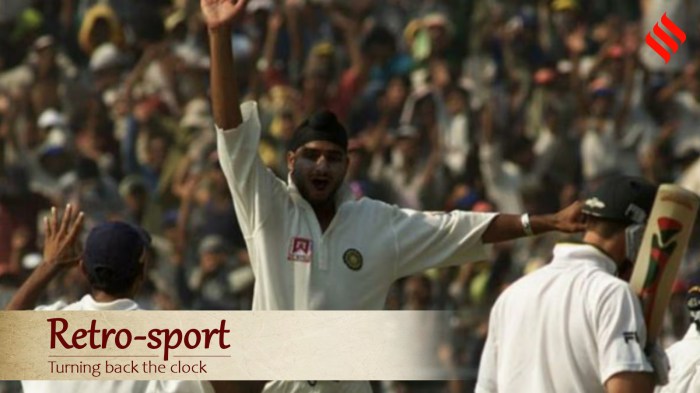
Also Read | How Harbhajan's off-spin made Ricky Ponting feel alone and helpless
The famous 2001 Test win against Australia was all about the Dravid-Laxman partnership, as well as how Harbhajan Singh's final trap sent the famous Australian line-up on a 16-match losing streak Was. details the mood in the Australian camp and how their batting deteriorated under constant pressure from Harbhajan. The atmosphere was there, but from the moment I stepped into this country for the first time, it became clear to me that Indians respect him. Knew. Didn't worry Ng. Deep deep. It might have changed, but clearly it did not.
Which became the third team to win the Test after four matches. Had batted against.
Don't believe that he had Dravid LBW in the last over before lunch. He was completely terrified at the conclusion of this Test - a quip for which he somehow escaped scrutiny - I don't think he was particularly thinking about it (Ponting bowling), some LBW decisions. It's also the last day about the decision, but they should have included it because it was equally controversial,'' he wrote.
Gave consolation.
"But as soon as Harbhajan started swinging the ball in the Test, I was there immediately," Miley said.
Decided to go down while winging it. For helping me to solve my problems against f spinner. Will take turning wickets to get the score.
I made sure that when I was captain I was always there for the players who were struggling.
Which became the third team to win the Test after four matches. Had batted against.
Don't believe that he had Dravid LBW in the last over before lunch. He was completely terrified at the conclusion of this Test - a quip for which he somehow escaped scrutiny - I don't think he was particularly thinking about it (Ponting bowling), some LBW decisions. It's also the last day about the decision, but they should have included it because it was equally controversial,'' he wrote.
Gave consolation.
"But as soon as Harbhajan started swinging the ball in the Test, I was there immediately," Miley said.
Decided to go down while winging it. For helping me to solve my problems against f spinner. Will take turning wickets to get the score.
I made sure that when I was captain I was always there for the players who were struggling.
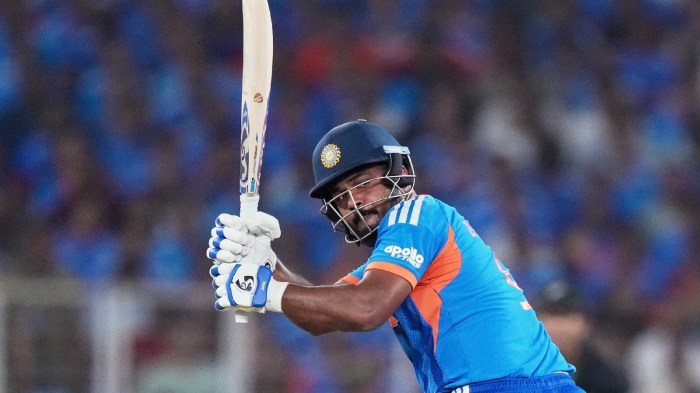
Also Read | Why does Anil Kumble think Sanju Samson's signing will contribute to CSK's fan following?
Former India bowler Anil Kumble opened up about Sanju Samson's move from Rajasthan Royals to Chennai Super Kings ahead of the upcoming Indian Premier League season starting on March 28. Champion CSK will take on Sanju's former franchise RR in their opening match on March 30 in Guwahati.
Continue the session. .
Continue the session. .
Also Read | Why can the team's total score be 300 runs in the 2026 IPL?
The descriptions of batsmen who saw their teams slip when the 300-run mark in T20 was within arm's reach are akin to those of mountaineers who were caught back on base within touching distance of E. Had to move away. were looted; Rerana. Can. The hawks are waiting.
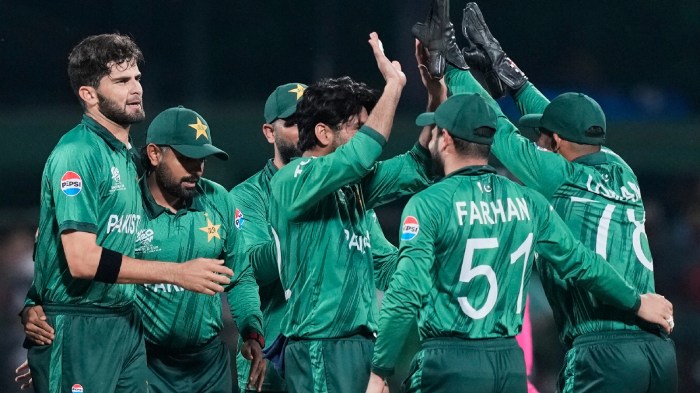
Also Read | Kamran Akmal criticized the Pakistan team after the series loss to Bangladesh: 'Do you want to steal the ICC trophy and bring it back?'
After a disappointing performance in the ICC T20 World Cup, Pakistan suffered an ODI series defeat to Bangladesh. Tore both of them and said that at this pace, how will the party progress?
And you have to remain fit in all three departments.
And you have to remain fit in all three departments.
Also Read | Why can the team's total score be 300 runs in IPL 2026?
The descriptions of batsmen who saw their teams slip when the 300-run mark in T20 was within arm's reach are akin to those of mountaineers who were caught back on base within touching distance of E. Had to move away. were looted; Rerana. Can. The hawks are waiting.